


You’ve likely heard the warnings that grain-free diets, or dog foods that contain peas, lentils or chickpeas in the first five ingredients, can cause heart disease. But is it really that categories of otherwise nutritious ingredients cause such serious problems or is it something else? Behind the pet food packaging scenes, a complex conversation is taking place among veterinary cardiologists, nutritionists and pet food manufacturers about DCM in dogs. Pet parents are worried and confused. Here is what we know about the relationship between your dog’s bowl and a healthy heart.
The Connection Between Diet and Your Dog’s Heart Health
In 2018, the FDA announced a growing number of dogs, without a genetic predisposition to heart disease, were showing up in vet clinics with dilated cardiomyopathy (DCM). The common denominator among these dogs with DCM wasn’t their DNA; it appeared to be their doggy dinner.
What is Canine Dilated Cardiomyopathy (DCM)?
In a healthy dog, the heart muscle is thick and powerful, efficiently snapping shut to move blood throughout the body. Dilated Cardiomyopathy (DCM) causes the heart muscle, particularly the normally thick wall of the left ventricle, to overstretch and become thinner and weaker. As the heart chambers enlarge, the “snap” disappears. The heart struggles to pump blood effectively, causing fluid to backup in the lungs and, eventually, leads to congestive heart failure.
Historically, DCM has been most common in certain purebred, large breed dogs – including Great Danes, Irish Wolfhounds, Boxers, Saint Bernards, and Doberman Pinschers – with a genetic predisposition to the disease. Less commonly, certain medium breed dogs, such as Cocker Spaniels and Portuguese Water Dogs, are affected, as well.
A non-genetic form of DCM also occurs, in any type of dog with no breed predisposition. This non-genetic DCM is typically seen in older dogs.
Why Nutrition Has Become a Concern for Veterinarians
DCM is still mostly a “large and giant breed dog” problem due to certain breeds’ genetics. However, beginning in the early 2000s, veterinarians started to see dogs that were not genetically susceptible to DCM, such as Golden Retrievers, developing the condition. In addition, unlike regular DCM, which is irreversible and fatal, some dogs showed significant improvement with taurine supplementation and/or dietary changes. This suggested that the non-genetic DCM might be caused by a nutritional deficiency or interference that could, in some cases, be managed or even reversed.
Vets coined the term “BEG” diets to categorize the common threads in reported cases. “Boutique” refers to small manufacturers who may not spend the money running feeding trials and regularly lab-testing their food to ensure nutritional bioavailability. “Exotic” refers to proteins like kangaroo, bison, or alligator, which haven’t been studied as long as chicken or beef. “Grain-Free” replaces traditional grains with heavy doses of legumes. While some of these diets offered novel pet food options, veterinarians found less assurances in products that lacked the decades feeding trials undertaken by legacy pet food brands.
The FDA Investigation: Separating Fact from Panic
When the FDA first announced a potential link between DCM and canine diets, it sent shockwaves through the veterinary community, as well as the pet food manufacturing and retail industries. Since then, the FDA has backed away from its initial warning and call to action. But the damage has been done. Many vets still issue blanket warnings to steer clear from diets rich in legumes, while pet parents remain fearful and confused. Quite a bit of research, however, provides more certainty than where the FDA last left things.
A Timeline of the Regulatory Findings
In 2018, the FDA sounded the alarm that there might be a connection between the spike in DCM cases in dogs without a genetic predisposition to heart disease and certain canine diets. This wasn’t a formal recall, but a call for data and research into the possible link.
By 2019, the FDA named 16 dry dog food brands most frequently associated with DCM reports. Notably, the dry dog food brands were well-known, including Blue Buffalo, Acana and Merrick. The most significant red flag among the FDA’s named 16 dry dog food brands implicated “pulse” ingredients—the seeds of legumes like peas, lentils, and chickpeas—which often appear at the top of the ingredient lists in grain-free diets.
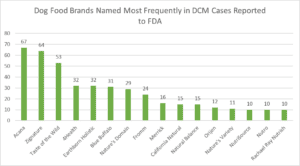
The theory isn’t that peas cause DCM, but that when they make up a large percentage of a dog’s caloric intake, they may interfere with how a dog absorbs essential amino acids or even leach those nutrients out of the body. Taurine is an amino acid that is critical for heart health. Unlike humans, dogs can synthesize their own taurine from other amino acids like methionine and cysteine. Since many diet-related DCM dogs showed taurine deficiency, this led to a theory that the higher fiber and legume content in grain-free diets were physically preventing the affected dogs from absorbing the taurine they managed to create. Another related theory is that the legume-rich food lacked the precursors, methionine and cystine, to synthesize taurine in the first place.
There are numerous problems with these totally unproven theories. One being that not one research study lends any support to them and, in fact, demonstrate the opposite. The other being the very small amount of affected dogs: between January 1, 2014 and November 1, 2022, only 1,382 non-hereditary DCM cases were reported to the FDA. While this number likely does not reflect the true incidence of DCM, it is nonetheless a very small dog population.
By late 2022, having found no causal connection between diet and DCM, the FDA basically dropped the issue, stating that the agency “believes that the potential association between diet and DCM in dogs is a complex scientific issue that may involve multiple factors.” In other words, any potential connection isn’t just one brand or ingredient per se. Rather, it would more likely be a perfect storm of formulation, individual dog biology, and ingredient processing. If the common denominator among the DCM-affected dogs was a combination of grain-free diets and low taurine levels, there must have been something more contributing to the onset of DCM.
The 2022 announcement was the FDA’s last on the issue. With no definitive answers or guidance, vets have remained understandably cautious. The veterinary better-safe-than-sorry approach includes warning consumers against diets in which legumes are listed within the first five ingredients. But this approach steers consumers away from otherwise healthy ingredients that could be quite beneficial to a dog’s health. Given the relative small number of affected dogs, it would appear way too cautious to wholly avoid an entire category of whole food legume ingredients. So let’s dive into what the scientific research actually tells us today.
Deconstructing the Nutritional Link to DCM in Dogs
To understand why your dog’s food might be affecting their heart, we have to look past the front-of-bag marketing claims, like “pea-free” or “grain-free.”
What The Science Actually Proves
One of the most important studies conducted a long-term feeding trial—18 months—and tested the heart health effects of different diets, from grain-free with peas and potatoes to grain-inclusive options, on healthy adult dogs. Over the course of the feeding trial, 54 dogs across a wide range of dog breeds received echocardiograms. The ecg results showed that heart function and taurine levels stayed normal across all the dietary groups. This is key and proves that, when your dog’s diet is properly balanced, ingredients alone are not the problem.
Focusing on nutrients—rather than specific ingredients—matters most. In one study, which examined the diets of 48 DCM dogs, 2 dogs switched from one grain-free diet to other grain-free diets and actually showed improvement in their DCM. This suggests that a grain-free diet per se is not the root cause of DCM, but rather the specific formula. Another study also concluded that there is no cause-and-effect relationship between grain-free diets and DCM, and other factors are likely at play.
Several reasons explain why this could be. Since taurine can be created from methionine and cysteine, AAFCO does not actually recommend any minimum dietary requirements for taurine. But the synthesis of taurine can depend on a dog’s size, body condition and life stage, as well as nutritional factors. This means that, even where AAFCO provides no minimum taurine concentration, it might still be necessary to add taurine to a commercial dog food. In reality, the lack of regulatory guidance means that the concentration of taurine in dog foods varies substantially.
Especially in plant-based dog food formulas, it is even likelier to require appropriate supplementation to ensure sufficient levels of taurine. Plant-based ingredients are higher in soluble fiber, which can decrease the bioavailability of amino acids needed to create taurine.
When formulating dog foods with higher concentrations of plant-based ingredients, it’s also more important to consider what cooking and processing the ingredients will undergo. We know from our own diets that cooking food also affects the nutritional outcome and composition. Raw legumes have some antinutritional factors, which can decrease protein digestion and nutrient absorption, but different cooking methods can destroy the antinutritional factors and thus improve the overall quality of plant-based ingredients and final diet. On the other hand, intense heat processing can also undermine the bioavailability of amino acids.
In sum, the science on the subject does not point to specific categories of ingredients, but rather to faulty nutrient formulation in some, but not all, grain-free diets.
Why Science-Backed Matters More Than Marketing Labels
A label that says “Pea-Free” or “Grain-Free” actually tells you nothing about the nutritional availability of the ingredients. A food can be made of organic kale and wild-caught salmon and still be nutritionally bankrupt depending on the processing of those ingredients, as well as the formula as a whole. Recall that the FDA’s named 16 pet food brands were all dry dog foods. Similarly, foods with legumes within the first five ingredients also do not tell you the full story.
Science-backed formulation matters more than a trendy ingredient list. Nutrient digestibility and overall bioavailability can significantly increase the risk of DCM development, as well as other health conditions. Pet food companies can sell food by simply slapping a guaranteed analysis on the packaging—this tells consumers the total dietary protein, for example, but does not account for the total amino acid profile (the building blocks of protein), let alone the bioavailability or digestibility of the ingredients’ nutrients. Beyond just meeting the AAFCO nutrient profiles, which is all that is required to sell dog food, companies should ensure that the intended nutrients are actually being provided to and received by dogs. This requires rigorous testing, which companies often don’t do.
What is even more concerning is that companies can carelessly say “science-backed” without actually doing any testing. There is so little regulatory oversight in pet food. The only way to know for sure is to reach out to companies and ask to see the results of any feeding trials and lab testing performed.
What You Can Do For Your Dog Now
If there’s one takeaway from the science it is that the specific formula matters most. Not all grain-free diets or plant-based pet foods are created equal. You don’t need to panic, but it’s important to choose a pet brand you can trust. Transparency and results matter more than savvy marketing. Legumes are nutritious and beneficial ingredients that can be used in combination with complementary ingredients to meet the nutritional needs of dogs, so long as you choose your pet food carefully.
Rotate Diets
Feed your dog a well-balanced diet, made from high quality ingredients, to avoid nutritional deficiencies. Given that dogs often eat the same food for long periods of time, overuse of any one diet can increase the risk of nutrient deficiencies if that diet happens to be deficient in any way. To avoid this, some vets recommend rotating proteins and diets, similar to how humans ultimately get a wide range of nutrients from eating a varied diet. Transitioning your dog to new foods is perfectly ok, as long as you transition slowly, gradually increasing the new food as your dog adjusts.
Go Beyond the Marketing
Look for highly digestible diets, which will allow your dog to fully benefit from all available nutrition. This means seeking out companies with rigorous nutritional testing and quality control to ensure nutritional adequacy. Turn the bag over and read the ingredients. If you see legumes listed within the first five ingredients, it’s especially important that plant-based diets are supplemented with sufficient quantities of bioavailable taurine and/or methionine and cysteine to support taurine synthesis.
Consult Your Vet: When to Ask for a Cardiac Screening
If your dog has been eating a BEG diet for years, a simple conversation with your vet is the best next step. They may recommend a blood test to check taurine levels or a proBNP blood test, which can can act as a warning sign for potential stretching of the heart muscle. If you have a large and giant breed dog already prone to heart issues (boxers, doberman pinschers, Great Danes, Irish wolfhounds, Newfoundland, standard and giant schnauzers and Saint Bernards), these screenings are even more important.
Regular vet checkups can help to diagnose a heart problem before the onset of clinical signs. This is the best time to diagnose a problem—early detection can allow your vet to prescribe appropriate medications, supplements and dietary changes to help them live longer and happier.
What Makes Bramble a Heart-Healthy Dog Diet
Bramble was started by a dog mom and formulated by a board-certified veterinary nutritionist who care about providing your pup with the highest quality food you can trust. Here’s what makes Bramble a heart-healthy diet:
- Formulated by Board-Certified Veterinary Nutritionists: If there’s one thing the science has proven, it’s that formulation matters even more than ingredients. Bramble’s diets are formulated to provide more than just the minimum required nutrients. Bramble is high in protein and appropriately supplemented to keep taurine and carnitine levels well within the healthy range.
- High Quality, Thoughtful Ingredients: Bramble is made with a low-fiber plant-based protein source, so that Bramble’s fiber content benefits dogs without causing taurine deficiency. We use a combination of proteins to provide a better amino acid profile. Nutrients are added directly to Bramble’s recipes to ensure they are both present and available to dogs!
- Gently Cooked, Not Over-Processed: Bramble’s fresh ingredients are gently cooked—not over-processed—which improves digestibility while also maintaining nutrient viability.
- Science-Backed: When we say science-backed, we mean it. Bramble recipes are regularly tested at a third-party lab to ensure the full nutrients and amino acids that are necessary to keep dogs healthy and living longer.
- Highly Digestible: Bramble conducted a feeding trial which showed that Bramble’s protein was highly digestible, matching the bioavailability of premium animal protein, while also improving gut health and significantly lowering cholesterol and triglycerides.
Common Questions About DCM in Dogs
Is grain-free dog food dangerous for my dog?
No. “Grain-free” isn’t the culprit. What might have contributed to diet-related DCM in dogs is the specific formulation of certain brands that relied too heavily on legumes and hadn’t been tested to ensure the bioavailability of certain nutrients. In one study, dogs actually showed improvement in their DCM when they were switched from one grain-free diet to other grain-free diets. What matters most is finding a well-formulated, highly digestible dog food, which will allow your dog to fully benefit from all available nutrition.
What symptoms of DCM should I be watching for at home?
As DCM progresses, you might notice your dog growing tired on walks, coughing (especially at night), or having difficulty breathing. Fainting spells or a bloated-looking belly are signs of a medical emergency. Regular vet checkups can help to diagnose a heart problem before the onset of clinical signs. This is the best time to diagnose a problem—early detection can allow your vet to prescribe appropriate medications, supplements and dietary changes to help them live longer and happier.
Are certain breeds more at risk of diet-related DCM?
WhileGolden Retrievers are the highest DCM-affected breed reported to the FDA, the second highest reported dogs are mixed breeds. Since taurine deficiency is a nutritional issue, it can affect any breed, from Chihuahuas to Great Danes.
Should I start adding taurine supplements to my dog’s meals?
While taurine is generally safe, adding it to an already poorly formulated diet is like putting a band-aid on a more serious injury. Rather than trying to fix a bad diet with supplements, it is best to feed your dog a well-balanced dog food, made from high quality ingredients, to avoid nutritional deficiencies. Look for highly digestible diets, which will allow your dog to fully benefit from all available nutrition. This means seeking out companies with rigorous nutritional testing and quality control to ensure nutritional adequacy.
Taking Control of Your Dog’s Long-Term Wellness
Your dog trusts you to choose what goes into their bowl. While the headlines about DCM can be scary, we now know more about the link between the gut and the heart. Of course, it’s easier to keep things simple. Staying away from pet foods that contain legumes within the first five ingredients is easier than researching and emailing a specific dog food brand. But by prioritizing scientific formulation over marketing trends and maintaining an open dialogue with your veterinarian, you aren’t just feeding your dog—you’re protecting them for years to come. You can start feeding Bramble’s human-grade, plant-based recipes here.